What Is Glamping? A Beginner's Guide to Luxury Camping
If you've heard the word "glamping" but aren't quite sure what it means, you're not alone. The term blends "glamour" and "camping" to describe a way of experiencing the outdoors with a much higher level of comfort than traditional camping.
How it differs from traditional camping
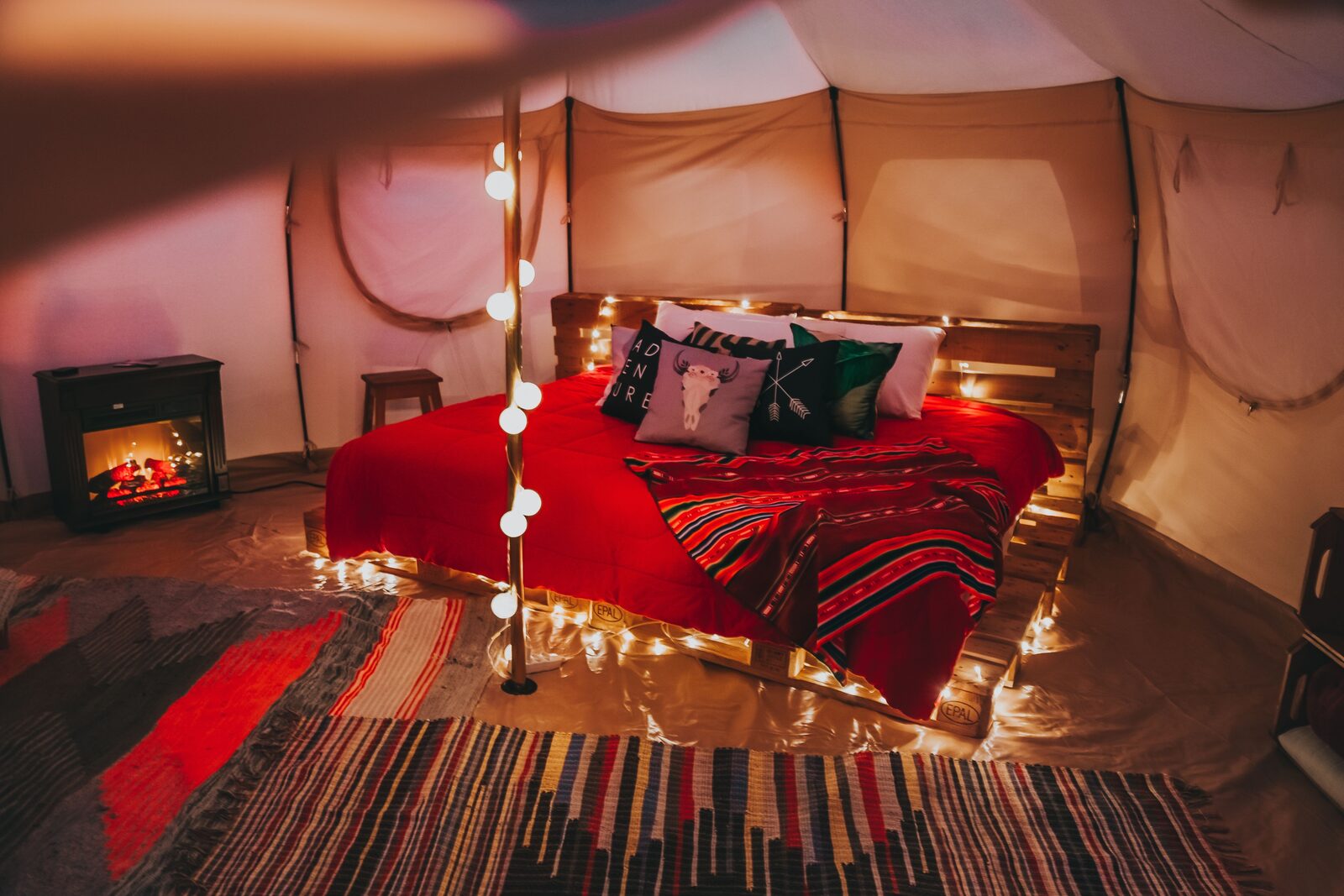
With traditional camping, you bring your own tent and sleeping bag and often share communal bathrooms. With glamping, the accommodation is already set up and furnished for you: a real bed, linens, electricity, and often a private bathroom or even heating and air conditioning. It's the outdoor experience without most of the inconveniences of camping. For a fuller side-by-side comparison, including price differences, see our glamping vs camping guide.
Types of glamping accommodation
Safari tents, spacious and built on a wooden frame with heavy-duty canvas, furnished like a small hotel room. Geodesic domes, often with a transparent roof panel, popular for stargazing. Yurts, circular tents of Mongolian origin, well insulated and cozy. Treehouses, a more unusual option common in forested settings. And small wooden lodges or cabins, the middle ground between glamping and a chalet.
How much it costs
Prices vary widely by season, location and quality: simple setups start around $90-130 per night, while luxury options with a private pool, spa access or included breakfast can reach $300-500+ per night. As a rule, glamping costs more than traditional camping but less than an equivalent hotel in the same location.
Who it's for
Glamping is especially popular with couples looking for a romantic weekend, families with young children who want nature without too many sacrifices, and anyone who simply doesn't enjoy pitching a tent but still wants to sleep surrounded by greenery. No camping experience is required — it's designed for people who wouldn't normally camp at all.
One practical tip
Before booking, always check what's included in the price (linens, breakfast, electricity) and whether the bathroom is private or shared: glamping properties vary a lot, and that's usually where the real price differences come from.
Note: the links to Booking.com and the other services below are affiliate links. If you book, we may earn a commission at no extra cost to you. Learn more
Ready to book? Search glamping availability and deals in Italy on Booking.com.
Search glamping stays in Italy on Booking.com →See also: What to pack for a glamping weekend