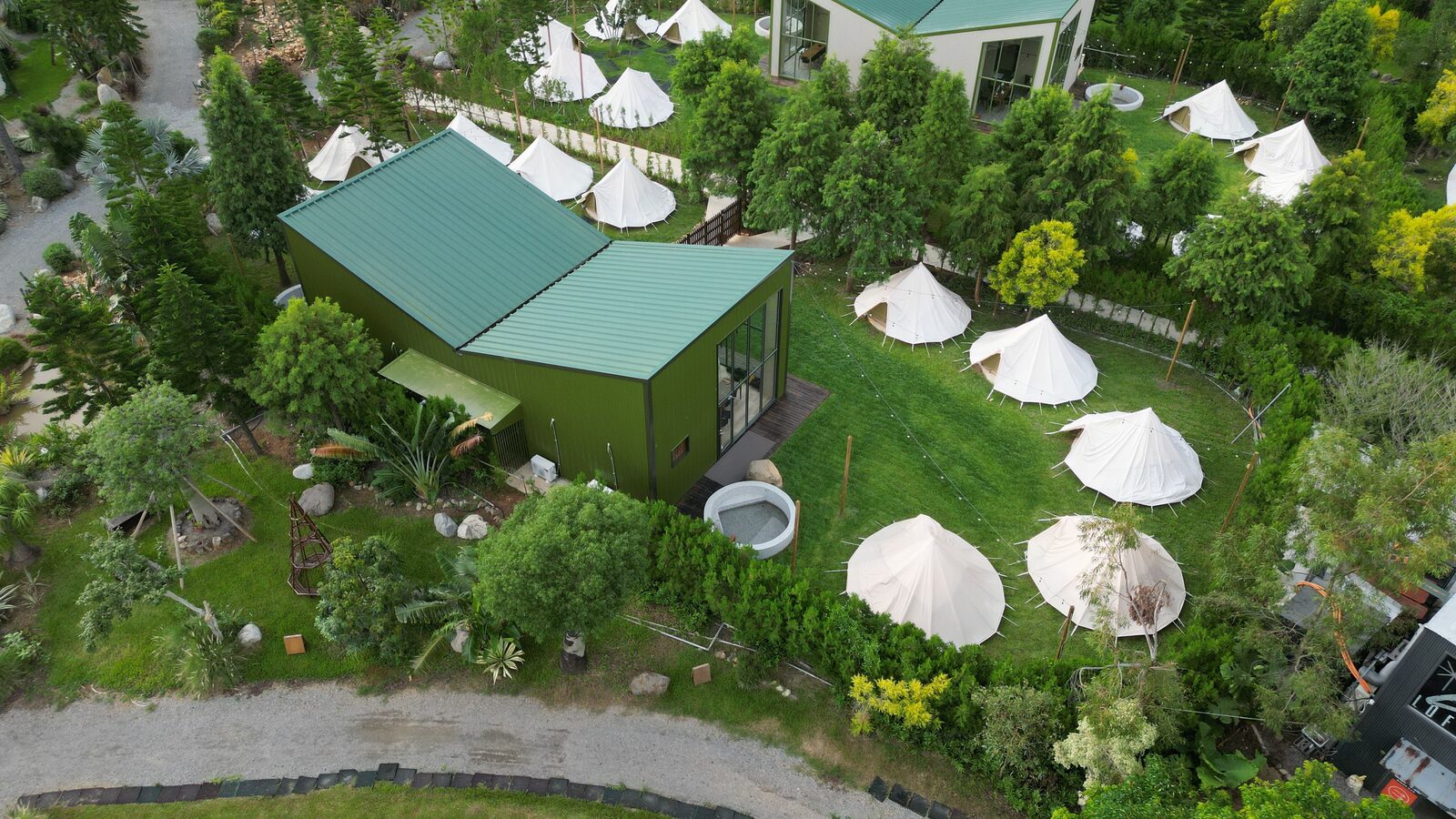
The Global Glamping Market in 2026: Trends and Data
Glamping has moved from a niche travel trend to a genuine hospitality category, with major hotel groups now paying attention. It's still a small slice of the overall accommodation market, but it's one of the fastest-growing ones. Here's what the most recent industry data says about market size, regional performance, and what's fuelling demand — with sources cited throughout.
How big is the glamping market in 2026
Estimates vary between research firms, but the direction is consistent. Grand View Research values the global glamping market at roughly USD 4.2 billion in 2026, projected to reach USD 7.9 billion by 2033 at a compound annual growth rate (CAGR) of 9.5%. Fortune Business Insights puts 2026 at a similar USD 4.07 billion, growing to USD 9.15 billion by 2034 at a CAGR of 10.67%. The gap between estimates comes down to how each firm defines "glamping" accommodation, but both agree the market is roughly doubling within the decade.
Europe still leads, North America is catching up fastest
Europe dominated the global glamping market with a 37% share in 2025, generating around USD 1.33 billion in revenue, and is expected to grow at a CAGR of 8.7% through 2033 according to Grand View Research. North America is close behind in market share but is growing faster: valued at roughly USD 1.51 billion in 2026, the region is projected to expand at a CAGR of 11.7% through 2033, making it the fastest-growing major region. Asia-Pacific remains smaller in absolute terms but is where several forecasts expect the sharpest percentage growth over the next decade, as glamping resorts expand in emerging destinations.
Why the market keeps growing
A few drivers show up consistently across industry reports. Experiential and nature-based travel keeps gaining ground, particularly with millennial and urban travellers who want an outdoor stay without giving up comfort. Social media continues to shape where people choose to stay, rewarding visually distinctive accommodation like domes, treehouses and safari tents. Sustainability is a growing selling point too, with some operators moving toward "net-positive" models where the guest experience actively supports the surrounding ecosystem rather than just minimising harm.
Big hotel brands are entering the category
Perhaps the clearest sign that glamping has gone mainstream: major hospitality groups including Marriott, Hyatt and Hilton have started adding glamping-style properties or partnerships to their portfolios. For independent operators, this raises the bar on guest expectations — private hot tubs, all-inclusive packages and digital booking convenience are increasingly the norm rather than a premium extra — but it also validates the category to a much broader travel audience than five years ago.
What this means for travellers and operators
For travellers, faster growth generally means more choice and, in competitive markets, more mid-range options as supply catches up with demand. For anyone considering opening or investing in a glamping site, the data points to steady returns rather than a bubble: growth is broad-based across regions rather than concentrated in one hotspot, and demand is increasingly driven by structural shifts — remote work flexibility, a preference for domestic and short-haul travel, and sustained interest in nature-based tourism — rather than a short-term pandemic-era spike.
In short: glamping remains a small part of global tourism, but it's growing roughly twice as fast as the broader accommodation sector, with Europe leading on scale and North America leading on growth rate.
Sources
Grand View Research, Glamping Market Size, Share & Trends Report, 2026-2033 — Fortune Business Insights, Glamping Market Size, Share & Industry Analysis — Grand View Research, Europe Glamping Market Size & Outlook, 2026-2033.
Note: the links to Booking.com and the other services below are affiliate links. If you book, we may earn a commission at no extra cost to you. Learn more
Ready to book? Search glamping availability and deals in Italy on Booking.com.
Search glamping stays in Italy on Booking.com →